

You’re not here for a generic list of “top 10 casinos” or another gushing ode to the thrill of the spin. You want to understand how the iGaming ecosystem actually works—why some players consistently grind small profits at poker while others hemorrhage cash on slots, how bookmakers set odds that seem both generous and impossible, and what separates a casino that treats you fairly from one that quietly eats your balance. Let’s cut through the noise.
The iGaming Landscape: More Than Just Glorified Gambling
Online gambling isn’t a monolith. It’s a trillion-dollar industry segmented into distinct verticals, each with its own mathematics, psychology, and user base. The four pillars you mentioned—casino, betting, slots, poker—behave very differently. Treating them as interchangeable is the first mistake a new player makes.
- Casino (table games): Blackjack, roulette, baccarat. These have fixed odds and, crucially, decisions you can make to lower the house edge (e.g., basic strategy in blackjack reduces the house edge to ~0.5%).
- Sports betting: The bookmaker sets a margin (the vig) on each market. Your skill matters, but so does line movement and injury news. Sharp bettors exploit soft lines; casual bettors pay the juice.
- Slots: Pure RNG. No skill. Return to player (RTP) typically ranges from 94% to 97% online, but volatility determines how wild the ride is. A high-volatility slot can go 200 spins without a win.
- Poker: The only vertical where you compete against other players, not the house. The rake is the house’s cut. Skill edge is real and measurable over tens of thousands of hands.
If you don’t know which game you’re playing, you’re gambling. If you do, you’re managing risk.
Casino Games: Where Math Meets Discipline
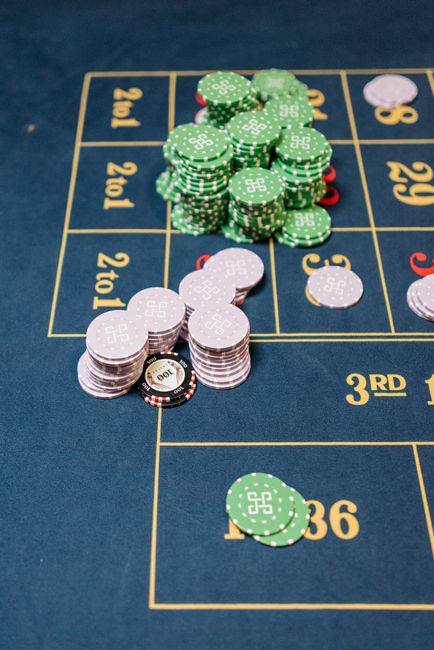
Walk into any online casino lobby and you’ll see blackjack tables with side bets promising 50:1 payouts. Those side bets are often the worst value on the screen—house edges north of 5% or even 10%. The main game, played with perfect basic strategy, is far kinder. Roulette is simpler: European single-zero wheel has a 2.7% house edge; American double-zero jumps to 5.26%. That difference compounds brutally over hundreds of spins.
What most players miss is that casino bonuses—welcome offers, free spins, cashback—are not free money. They come with wagering requirements, game weightings (slots usually count 100%, blackjack maybe 10%), and maximum bet rules. A $100 bonus with 40x wagering and a 10% blackjack contribution means you need to wager $4,000 on blackjack alone to clear it. That’s not a gift; it’s a retention tool. Read the terms. Always. For practical tips, check out v88.ru.com.
A concrete example:
Suppose you deposit $200 and get a $200 bonus with 30x wagering on slots (weighted 100%). You must wager $6,000 before withdrawing. At an average RTP of 96%, you’ll lose roughly $240 in the process. The bonus is gone, and you’re down $40 of your own money—on average. Bonuses can still be +EV if you pick low-house-edge games and high RTP slots, but only if you do the math first.
Sports Betting: The Art of Beating the Closing Line
Sports betting isn’t about picking winners. It’s about finding prices that are wrong. Bookmakers employ odds compilers and algorithms that adjust lines based on money flow, injuries, weather, and public sentiment. The closing line—the final odds before an event starts—is the sharpest estimate of true probability. If you consistently bet into lines that later move in your favor, you have an edge.
Consider a typical NFL game. The Chiefs are -7 (-110) against the Raiders. You think the true line should be -9. You bet early. By kickoff, the line moves to -8.5. You beat the closing number by 1.5 points. Over hundreds of bets, that’s the difference between profit and loss. Most recreational bettors chase steam or bet parlays with massive holds (parlay house edge can exceed 20%). Sharp bettors bet single markets, shop for the best price across multiple books, and track their closing line value (CLV).
- Tip: Line shopping alone can add 2–4% to your ROI. If one book offers -105 instead of -110, that’s a 4.5% swing in implied probability.
- Data point: Professional bettors aim for a 2–5% ROI over thousands of bets. Anything higher is usually variance, not skill.
Slots: The Science of Spin and Volatility
Slots are the most popular iGaming product, and the most misunderstood. Modern slots use random number generators (RNGs) that produce millions of outcomes per second. The RTP is baked into the paytable and reel strips. A 96% RTP slot returns $96 for every $100 wagered over millions of spins—but your session could end in minutes or hours.
Volatility is the key metric. Low-volatility slots pay small amounts frequently. High-volatility slots (like Book of Dead or Bonanza) can pay 10,000x your stake but may drain your balance for 300 spins first. If you have a $50 bankroll, playing a high-volatility slot at $1 per spin is suicide. Match your bankroll to volatility:
- Low volatility: 100–200 spins minimum.
- Medium volatility: 200–300 spins.
- High volatility: 500+ spins, or use a smaller bet size.
Also, check the RTP before you play. Some casinos offer the same slot with different RTPs (e.g., 94% vs 96%). The house edge doubles. Always look for the published RTP in the game info or casino help section. And never chase losses—slots are negative EV by design. Play for entertainment, not income.
Poker: The Last Bastion of Player Skill
Poker is the only iGaming vertical where long-term profit is possible without exploiting bonuses or betting edges. But it’s not easy. The rake—typically 5% up to $3 per pot—means you need to win more than your fair share just to break even. At micro-stakes, rake can eat 10–15% of your winnings. At high stakes, it’s lower relative to pot size.
To succeed, you need a framework:
- Bankroll management: 20 buy-ins for cash games, 100 buy-ins for tournaments.
- Game selection: The softest games are often at off-peak hours or lower stakes. Avoid tables full of short-stackers and regs.
- Study: Solvers, equity calculators, and hand history reviews are non-negotiable. Playing without study is just gambling with extra steps.
- Mental game: Tilt is the biggest leak. A single bad beat can cost you three buy-ins if you don’t walk away.
Online poker is tougher than live because you can multi-table and use HUDs (heads-up displays). If you’re not using tracking software, you’re at a disadvantage. But even without it, tight-aggressive play at low stakes can yield a 2–5bb/100 win rate—respectable but grindy.
Final Thoughts: Treat iGaming Like a Business, Not a Lottery
The difference between a winning and losing iGaming experience isn’t luck—it’s approach. Casino games are entertainment with a built-in cost. Sports betting rewards discipline and line shopping. Slots are pure chance, so manage your bankroll and volatility. Poker is a skill game disguised as gambling, but only if you put in the work. None of this is about chasing jackpots. It’s about understanding the math, the rules, and yourself. The house always has an edge in the long run—except in poker, and even there, the rake takes its cut. Play smart, track your results, and never bet more than you can afford to lose. That’s not a cliché; it’s the only way to survive the grind.


Coding is used in almost all aspects of life and work now, be it directly or indirectly. It’s not just for companies in the tech sector. “An increasing number of businesses rely on computer code,
Coding is used in almost all aspects of life and work now, be it directly or indirectly. It’s not just for companies in the tech sector. “An increasing number of businesses rely on computer code,
Coding is used in almost all aspects of life and work now, be it directly or indirectly. It’s not just for companies in the tech sector. “An increasing number of businesses rely on computer code,