

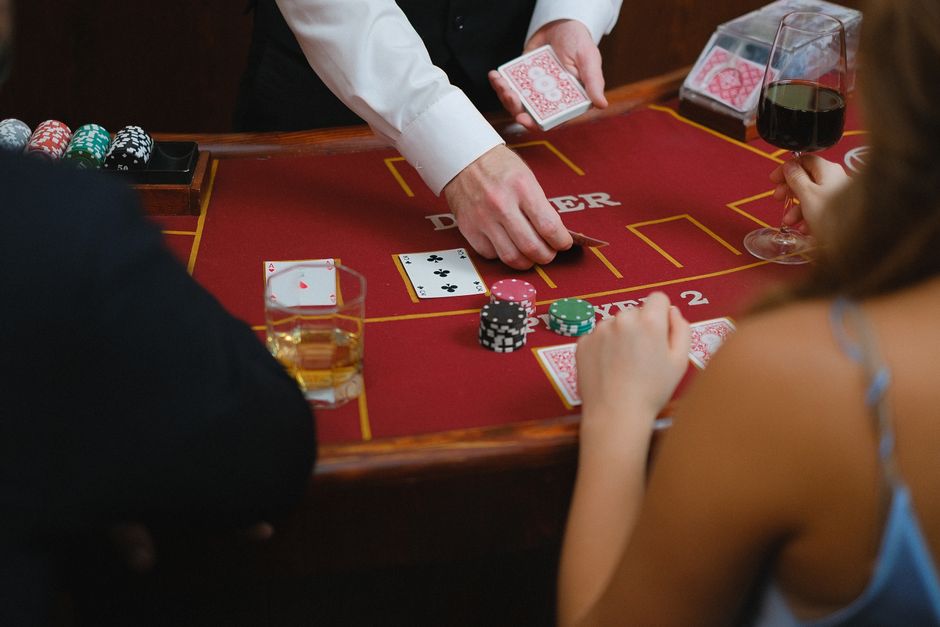
Every gambler eventually faces the same uncomfortable question: is any of this actually within my control? It's the question that keeps poker players up at night and the one slots fans rarely bother asking. And the answer is messier than either camp likes to admit. The truth is that iGaming isn't a single activity with a single skill curve. It's a spectrum, and where you land on that spectrum determines how you should think about every bet you place.
Let's break down what's actually happening when you spin, deal, or lay a wager, and why understanding the difference matters more than any hot streak.
Two Games Wearing the Same Clothes
Poker and slots live under the same casino roof, but they might as well be different species. In poker, you're playing against other people. The house takes a rake, sure, but your opponents are the ones you're beating. That means information, psychology, and pattern recognition matter. A player who understands position at the table, reads betting patterns, and manages their bankroll properly will outperform a casual player over thousands of hands. Not every session, but over time.
Slots are the opposite. You're playing against a random number generator that has no memory, no mood, and no response to your strategy. The payout percentage is fixed in the machine's programming, and no amount of rubbing the screen changes it. A slot machine returning 96% will pay back 96% of all money wagered over its lifetime, and the distribution of that money is essentially random from spin to spin. This is explained well on Debet.
Here's the part that trips people up: both games can make you feel skilled. Slots create that feeling through near-misses and bonus triggers that feel earned. Poker creates it through real decision points, but also through luck disguised as skill in the short term. A bad player can win a tournament. A good player can bubble for a month.
What Skill Actually Buys You at the Poker Table
In poker, skill doesn't mean you win every hand. It means you make better decisions with incomplete information than your opponents do. That edge compounds slowly and only shows up clearly over large sample sizes. A strong player might have a win rate of 5 big blinds per 100 hands at a given stake. That's a real edge, but it's invisible in a single session and can vanish over 10,000 hands if variance has a bad month.
Where skill shows up concretely:
- Position awareness: Acting last gives you information. Playing more hands from the button and fewer from early position is a fundamental edge almost no beginner applies.
- Bankroll management: Choosing stakes that match your roll prevents the single biggest cause of busted poker accounts, which is playing too high and tilting off a buy-in.
- Bet sizing and ranges: Understanding what your opponent's bet size tells you, and what your own bets communicate, separates thinking players from button-mashers.
- Emotional control: Tilt is a skill leak. A player who can fold a losing hand without chasing a loss preserves more equity than one who double-or-nothing's every bad beat.
None of this guarantees profit in a given night. It guarantees that over a long enough horizon, the math tilts in your favor relative to weaker players. That horizon is usually far longer than most people are willing to accept.
Why Slots and Sports Betting Feel Deceptively Skillful
Sports betting sits in a weird middle ground that confuses a lot of people. Yes, you can study teams, injuries, weather, and line movement. A sharp bettor can find value in mispriced markets. But the sportsbook's margin means you need to be right more than 52.4% of the time just to break even on a standard -110 line. Most recreational bettors are not operating at that level, and many mistake a good month for a permanent edge.
Slots and roulette remove the illusion entirely if you look at the math. Every bet has a negative expected value over time, built into the game's design. The only way to come out ahead is to stop while you're up, which is a strategy about quitting rather than winning.
The danger is that both slots and sports betting are engineered to feel controllable. A near-miss on a slot reel activates the same reward circuits as an actual win. A bad beat in sports feels like a temporary setback rather than a statistical certainty. This is not accidental design.
Five Rules That Apply Across the Whole iGaming Spectrum
Whether you're grinding poker tournaments or spinning slots for entertainment, the same guardrails keep you from the place most players eventually end up. Here they are as numbered steps you can actually apply:
- Set a hard budget before you log in. Not a soft limit you can talk yourself past. A number you will not exceed, full stop.
- Know the house edge of what you're playing. Blackjack with basic strategy sits near 0.5%. Slot games can run from under 1% to over 10% depending on the machine. That range is enormous and worth checking.
- Treat winnings as winnings. Money left in the account is tempting money. Withdrawing it is the only way to actually own it.
- Distinguish entertainment from investment. Slots and most sports bets are entertainment with a built-in cost. Poker can be an investment, but only with a real bankroll and a real edge.
- Watch for the signs. Chasing losses, hiding play from people you trust, and playing just to feel normal are warning signs that have nothing to do with how much you have won or lost.
The Wrong Question and the Right One
People ask whether poker is skill or gambling, or whether slots can be beaten. Those questions lead nowhere useful. The better question is what you are actually trying to get out of the session. If it's a shot at life-changing money, you need to understand that the variance of every one of these games makes that outcome unlikely on any given night, no matter how smart you are.
If it's entertainment, great. Play within your means, pick games where the house edge doesn't destroy you, and treat the cost like a movie ticket.
If it's a genuine long-term profit, poker and sharp sports betting are the only lanes where a real edge exists, and even there it takes years of study, discipline, and honest tracking to prove you have one. The casino doesn't care which lane you choose. It profits either way. The only person whose outcomes you can actually influence is you, and that influence starts with admitting how much control you truly have.


Coding is used in almost all aspects of life and work now, be it directly or indirectly. It’s not just for companies in the tech sector. “An increasing number of businesses rely on computer code,
Coding is used in almost all aspects of life and work now, be it directly or indirectly. It’s not just for companies in the tech sector. “An increasing number of businesses rely on computer code,
Coding is used in almost all aspects of life and work now, be it directly or indirectly. It’s not just for companies in the tech sector. “An increasing number of businesses rely on computer code,