

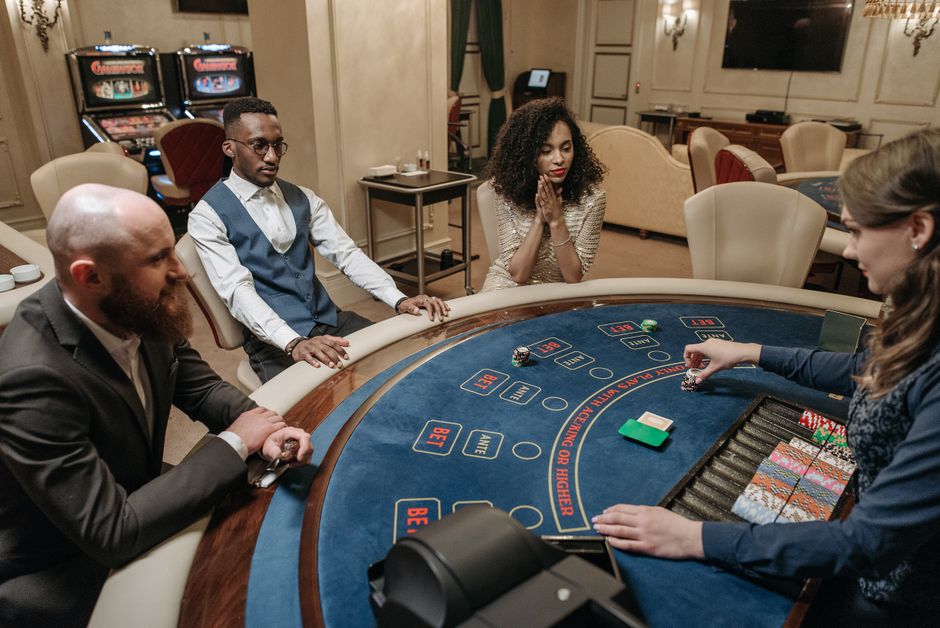
Every gambler has heard the same tired line: the house always wins. It's true in the long run, but it's also a lazy way to describe an industry where a blackjack card counter, a slot spinner, and a poker pro are playing three fundamentally different games. Understanding where luck ends and skill begins isn't just academic trivia. It changes how you bankroll, which games you choose, and whether you walk away ahead or wonder where your rent money went.
The House Edge Is Not a Fixed Tax
New players often assume every casino game siphons money at roughly the same rate. Nothing could be further from the truth. The house edge varies wildly, and that variance is your first real lever.
- Blackjack with basic strategy: roughly 0.5% house edge, sometimes less depending on the rule set.
- Baccarat (banker bet): about 1.06%.
- European roulette: 2.7%. American roulette with the double zero jumps to 5.26%.
- Slots: typically 2% to 10% depending on the machine and jurisdiction.
- Keno and specialty bets: often 25% or worse.
That gap matters enormously. A player cycling $1,000 through a 0.5% edge game loses about $5 in expected value. The same money through a 25% keno ticket loses $250. The game you choose is a bigger decision than the bet you place.
Where Skill Actually Moves the Needle
Skill in casino games falls into three broad categories: decision-making under uncertainty, information processing, and bankroll management. Poker is the purest example. A skilled poker player doesn't beat the house because the house takes a rake, not a side. They beat other players. Over thousands of hands, the better player extracts value from worse opponents, and the rake becomes a cost of doing business.
Blackjack is the second clearest case. Basic strategy, which is just a memorized chart of correct plays, cuts the house edge to nearly nothing. Add card counting and the edge flips to the player, usually somewhere between 0.5% and 1.5% depending on the count system and penetration. That's not enough to win every session, but it's enough to profit over hundreds of hours if the casino doesn't back you off first.
Sports betting sits somewhere in the middle. Line shopping, injury news, weather, and public betting patterns all create small inefficiencies. A sharp bettor who consistently finds the best number can grind out a return, but the margin for error is razor-thin.
Slots: The Game Where Skill Barely Exists
Slots are almost pure chance. Each spin is an independent event driven by a random number generator, and no amount of timing, tapping, or ritual changes the outcome. That said, a few practical skills still matter: Some of the clearest guidance on this comes from Chích sách riêng tư.
- Choose your volatility. Low-volatility slots pay smaller amounts more frequently. High-volatility slots can go hundreds of spins without a meaningful hit, then pay huge. Match the slot to your bankroll, not your mood.
- Understand RTP and hit frequency. A 96% RTP machine and a 92% RTP machine look identical on the floor. Over 10,000 spins at $1 each, that four-point difference is $400 of expected value.
- Use bonuses wisely. Wagering requirements turn a generous-looking 200% match into a grind. Read the terms before you deposit.
What slots reward is discipline, not intuition. The players who lose fastest are the ones chasing a losing session with bigger bets.
Bankroll Management: The Skill Nobody Talks About
If there's one skill that separates recreational players from survivors, it's bankroll discipline. The math is simple but brutal. Variance in poker, blackjack, and even low-edge table games is much larger than most people expect.
A winning poker player with a 5 big blind per 100 hands win rate needs a bankroll of at least 20 to 30 buy-ins to survive normal downswings. A blackjack card counter should expect losing months even with a real edge. Slots players should assume they will lose the entire session budget and treat it as entertainment spend, not an investment.
Practical rules that actually work:
- Set a session stop-loss before you sit down, and honor it.
- Never chase losses with increased stakes. That's how small losses become catastrophic ones.
- Separate gambling money from living money. Always.
- Track results honestly, including the winning sessions. Memory lies.
The Psychological Trap: Illusion of Control
Casinos are engineered to make chance feel like skill. Slot machines show near misses that look like almost-wins. Roulette displays the last twenty results, tempting you to believe red is "due." In reality, each spin is independent, and the ball has no memory.
Poker and blackjack complicate this because real skill exists there, which makes it easy for players to overestimate how much skill they have. A poker player who wins a few sessions can convince themselves they're a pro, then lose a month's salary in a game that was way above their bankroll and skill level.
The honest framing is this: skill determines your expected value, luck determines your short-term results. A great poker player can lose for 50,000 hands. A terrible one can win for a weekend. The longer you play, the more skill shows up in the results. That's both the opportunity and the warning.
Choosing Your Games With Open Eyes
If you want entertainment, slots and roulette are fine, as long as you treat the money as spent the moment it leaves your account. If you want a chance at a real edge, poker, blackjack, and sports betting offer genuine skill-based opportunities, but they demand study, discipline, and a tolerance for brutal variance.
The worst position is the middle one: playing a skill game casually against people who take it seriously, while believing luck will bail you out. The best position is knowing exactly which game you're playing and why. Luck decides tonight. Skill and choices decide the long run.


Coding is used in almost all aspects of life and work now, be it directly or indirectly. It’s not just for companies in the tech sector. “An increasing number of businesses rely on computer code,
Coding is used in almost all aspects of life and work now, be it directly or indirectly. It’s not just for companies in the tech sector. “An increasing number of businesses rely on computer code,
Coding is used in almost all aspects of life and work now, be it directly or indirectly. It’s not just for companies in the tech sector. “An increasing number of businesses rely on computer code,